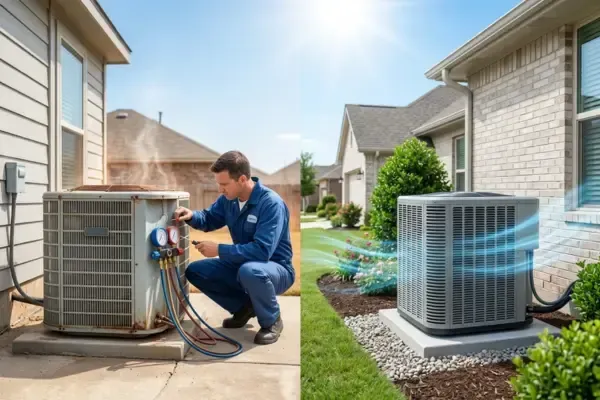
Should You Repair or Replace Your AC Unit?
Should You Repair or Replace Your AC Unit?
The Houston Heat Doesn’t Give You Time to Guess
If you’re a homeowner in Houston or Pasadena, TX, you know one thing for sure—when your cooling system starts struggling in the Texas heat, you don’t have the luxury of waiting around. With extreme temperatures, high humidity, and long run times, your HVAC unit is pushed to its limits, especially if you’re dealing with an old unitor an aging air conditioner. Whether it’s uneven temperatures, cold spots, rising energy costs, or even strange sounds coming from your system, these are all signs your current unit may not be operating at peak performance.
When something goes wrong, the big question becomes:
Should you repair your system—or is it time for a completely new unit?
This is one of the most common—and often most difficult decisions—homeowners face. On one hand, a simple repair or replacing a broken part might seem like the most cost-effective option in the short term. On the other hand, repeated air conditioning repair visits, growing repair costs, and a rising monthly bill can quickly make that smarter choice feel like a costly mistake. There’s a good chance that continuing to invest in an older system with lack of maintenance, outdated technology, or ongoing electrical issues will lead to more costly repairs down the road.
The reality is, there are a number of factors that go into making the best option for your home—things like the AC unit’s age, the quality of the unit, how often you’re dealing with minor issues, and whether your system is still delivering consistent cool air. Systems that are less energy-efficient or nearing the end of their system’s age(typically 10–15 years) often cost more to operate and maintain. In many cases, upgrading to anew HVAC system or brand-new unit—such as a modern central air system or even a geothermal heat pump—can offer significant energy savings, improved comfort, and better overall performance.
Newer systems with a higher SEER rating(Seasonal Energy Efficiency Ratio), recommended by the Department of Energy, are designed to deliver high-efficiency air while lowering your monthly bill. Add in today’s smart thermostats, available utility rebates, financial incentives, and even potential tax credits, and a replacement can make strong financial sense when looking at long-term savings.
At Brown Air Conditioning & Heating, we’ve guided thousands of Houston homeowners through this exact decision-making process. As a trusted HVAC company in the local HVAC industry, we focus on real-world solutions—not sales pressure. Whether you’re facing a high repair bill, dealing with a refrigerant leak, or considering anew air conditioner, we’ll help you determine the better option based on your home, your needs, and your budget.
If you’re unsure where to start, that’s exactly why we’re here. One call puts our team on your speed dial, ready to provide a free quote and honest recommendations—so you can choose the best solution for your home with confidence.
Why This Happens: AC Systems vs. Texas Conditions
In Houston, your AC system doesn’t just run—it endures.
Extreme Conditions Impact Your System
High humidity forces your system to remove moisture in addition to cooling
Long run times increase wear and tear on internal components
Outdoor heat reduces efficiency and increases system strain
The Reality of Older Systems
If your system is approaching its life expectancy—typically10-15 years—it becomes more prone to:
Frequent breakdowns
Reduced efficiency
Higher energy bills
Older systems also often rely on outdated refrigerants likeR-22 refrigerant, which is no longer produced and expensive to service.
Repair or Replace? (Core Decision Guide)
This is where experience matters. Let’s break down the key factors.
1. Age of the Unit
The age of the unit is one of the most important indicators.
General Rule:
Under 10 years old→ Repair is usually a good option
10-15 years old→ Depends on condition and repair cost
15+ years old→ Replacement is often the smarter investment
Older air conditioners lose efficiency and are more likely to require frequent repairs.
2. Cost of Repairs vs. Replacement
A good rule of thumb many HVAC professionals use:
If the cost of repairs exceeds 30–50% of the cost of a new system, replacement is often the better choice.
Consider:
Is this a one-time fix or recurring issue?
Are you facing another expensive repair soon?
3. Frequent Repairs
If you’re calling for HVAC repairs multiple times a year, that’s a major red flag.
Signs:
Repeated frequent breakdowns
Same issues returning
Increasing repair frequency
At this point, you’re likely spending more than necessary.
4. Energy Efficiency (SEER Ratings)
Modern systems have significantly better seasonal energy efficiency ratio (SEER ratings).
Why it matters:
Higher SEER = Lower energy bills
Older systems use more power
Upgrading to a more efficient unit can reduce your monthly costs and improve comfort.
5. Refrigerant Type (R-22 vs Modern)
If your system usesR-22 refrigerant, repairs involving refrigerant are becoming more expensive.
Why:
R-22 is phased out
Limited supply = high cost
A system with a refrigerant leak using R-22 may not be worth repairing.
6. Performance and Comfort
Ask yourself:
Is your home staying cool?
Is airflow consistent?
Are there hot spots?
If your system struggles to produce cool air, it may be time for an upgrade.
7. Indoor Air Quality
Older systems can negatively impact air quality.
Issues include:
Dust buildup
Poor filtration
Humidity imbalance
A new system improves both comfort and health.
Signs It’s Time to Replace Your AC Unit
Watch for These Warning Signs:
Your system is an older unit(typically over 10–15 years old)
Rising energy bills
with no clear explanation
Poor cooling performance or uneven temperatures
Ongoing air conditioner repair needs or frequent breakdowns
Loud or unusual noises coming from the unit
Uses outdated refrigerant and struggles to keep up
Your current system lacks the efficiency of modern SEER unit standards
These are key basic considerations when deciding between repair and HVAC replacement. If your system shows multiple signs, there’s a strong chance it’s nearing the end of its lifespan. Upgrading to newer air conditioner scan provide better efficiency, improved comfort, and long-term cost savings.
If you’re unsure, the best next step is to make an informed decision with help from a trusted professional.
What Homeowners Can Do First
Before making a decision, take these steps:
Quick Checks:
Replace air filters
Check thermostat settings
Inspect airflow
Ensure outdoor unit is clear
Sometimes small issues can mimic larger problems.
When to Call an HVAC Technician
If you’re unsure whether to repair or replace, it’s time to bring in an expert.
A professional HVAC technician will evaluate:
System condition
Efficiency
Repair history
Long-term cost outlook
At Brown Air Conditioning & Heating, we provide honest recommendations—never pushing replacement unless it truly makes sense.
Prevention: Protect Your Investment
Whether you repair or replace, maintenance is key.
Best Practices:
Schedule annual inspections
Replace filters regularly
Keep outdoor units clean
Benefits:
Extends system life
Reduces repair costs
Improves efficiency
Why Houston Homeowners Trust Brown Air Conditioning & Heating
We’ve built our reputation on:
Honest, straightforward service
Reliable repairs
Experienced technicians
Transparent pricing
We understand Houston’s climate and what your system needs to perform.
Make the Right Call Before It Costs You More
When your AC starts failing, waiting too long can turn a manageable repair into a costly replacement.
The key is to evaluate:
Age of your system
Repair frequency
Overall efficiency
Call Brown Air Conditioning & Heating Today
Expert guidance
Honest recommendations
Fast, reliable service
📞Call today to schedule your evaluation and get the peace of mind you deserve.
