Is Your Home Furnace a Danger? Carbon Monoxide Leaks
The Silent Winter Danger: Protecting Your Home from Carbon Monoxide and Furnace Risks
When temperatures dip across Houston, homeowners rely on their furnaces to keep their families safe and comfortable. But with that comfort comes a danger that’s often overlooked — carbon monoxide poisoning. Known as The Silent Killer, carbon monoxide (CO) is a colorless, odorless gas that can quickly become deadly when your heating system, gas water heaters, gas stoves or any gas appliances with pilot lights that are not properly maintained or ventilated.
From 2013 to 2023, counties surrounding Houston — including Montgomery, Waller, Harris, Austin, Fort Bend, Brazoria, Galveston, Chambers, and Liberty — recorded 1,036 calls about CO exposure in homes, representing 82.2% of all carbon monoxide–related poison calls in the region(Texas Department of State Health Services). Most of these incidents were preventable with proper furnace maintenance, CO detectors, and homeowner awareness.
What Carbon Monoxide Is — and Why It’s So Dangerous
Carbon monoxide forms when fuel such as natural gas, propane, or oil doesn’t burn completely during the combustion process. Inside a properly functioning furnace, exhaust gases are vented safely outdoors. But if your heat exchanger cracks, your flue pipe becomes blocked, or your burner operates inefficiently, carbon monoxide leaks into your home’s air.
Because CO has no smell and it a colorless gas, it can accumulate without warning, causing dizziness, fatigue, confusion, and even death. During the Houston freeze of 2021, Memorial Hermann–Texas Medical Center treated more carbon monoxide patients in one day than the entire year prior (Memorial Hermann Newsroom). That tragedy highlights how dangerous and fast CO exposure can occur — especially when families run heating systems or generators continuously during extreme weather.
Recognizing the Symptoms of Carbon Monoxide Poisoning
The first warning signs of the symptoms of CO poisoning you cannot see or smell. Early exposure often feels like the flu — headaches, dizziness, nausea, shortness of breath, or unusual fatigue. As levels rise, symptoms can progress to confusion, blurred vision, chest pain, chest tightness, and fainting. In severe cases, prolonged exposure can lead to loss of consciousness or even death. What makes CO so dangerous is that it builds slowly, especially during sleep or when heating systems run continuously. If you or anyone in your household feels suddenly ill when the furnace or gas appliances are operating — and the symptoms ease after stepping outside — it’s critical that all family members leave the home immediately, take immediate action, call 911, seek medical attention.
Install CO Detectors Today — Your First Line of Defense
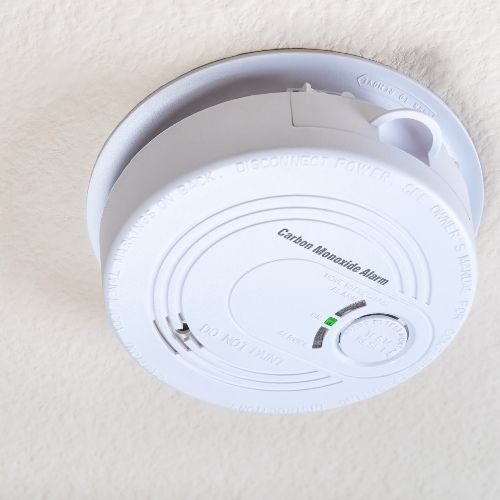
Even the best furnace cannot detect carbon monoxide. Every Texas home with fuel-burning appliances needs UL-listed carbon monoxide detectors installed outside bedrooms, on every floor, and near the furnace.
As the Houston Health Department warned after recent storms and power outages, CO poisoning often happens when people try to heat their homes or power appliances improperly(Houston Health Department). Detectors are affordable, easy to install, and — when combined with regular HVAC maintenance — save lives every year.
Pro Tip: Replace CO detector batteries every six months and test them monthly, especially before winter.
New Furnace Does Not Mean No Risk
If you’ve recently replaced your furnace, congratulations — you’ve taken a big step toward safer, more efficient comfort. But a new furnace doesn’t mean zero risk. Even modern, high-efficiency furnaces can develop blockages, installation errors, or ventilation problems that lead to CO leaks.
While today’s models include sealed combustion chambers, induced-draft fans, and flame sensors for added protection, they still rely on clean airflow and proper venting. That’s why it’s essential to schedule yearly maintenance to confirm your system is operating safely and efficiently.
Why Does My Furnace Smell Funny When I Turn It On?
The first time you switch on your furnace for the season, it might smell a little dusty — that’s normal. But if you notice a strong metallic odor, burning wires, or musty smell, your system need professional inspections. Unusual odors can indicate mold buildup, a blocked vent, or overheating parts, any of which can lead to incomplete combustion and CO buildup.
If something doesn’t smell right, it’s time for a professional furnace safety inspection.
Furnace Safety Inspections Save Lives
An annual inspection is more than just a tune-up — it’s your home’s first defense against CO leaks. During a Furnace Safety Inspection, Brown Air Conditioning & Heating’s licensed technicians check:
The a cracked heat exchanger or corrosion
The flue and venting system for obstructions
Gas pressure, ignition, and burner operation for efficient combustion
Carbon monoxide levels around the system
The flame color (a steady blue flame = healthy combustion)
Routine maintenance ensures your furnace not only runs efficiently but safely. In fact, most of the CO incidents reported in Texas come from older, poorly maintained systems that go years without professional service.
When to Replace Your Furnace
If your furnace is 15 years old or older, replacement isn’t just about comfort — it’s about safety. Aging systems are more prone to cracked heat exchangers, rusted vent pipes, and loose seals that allow CO leaks. Safety features have been implemented by the U.S. Department of Energy and Underwriters Laboratories (UL) that require furnaces to meet strict safety and emission standards (ANSI Z21.47, UL 795), but CO monitoring for the living space is considered a separate safety function handled by standalone detectors.
Newer systems use sealed combustion technology that draws air from outside the home, reducing risk and improving efficiency. But if you notice these warning signs, it’s time to consider an upgrade:
Rust flakes in your burner compartment
Frequent repairs or high energy bills
Yellow burner flames instead of blue
Uneven heating or unexplained odors
Upgrading isn’t a luxury — it’s peace of mind for your family.
Do New Furnaces Detect Carbon Monoxide?
No furnace, no matter how modern, includes built-in carbon monoxide detection. A new system can reduce risk but can’t sense danger. Only CO detectors can do that.
If you’re installing a new furnace, it’s the perfect time to add hardwired or smart CO detectors for full-home protection. Brown Air Conditioning & Heating can help you choose models that integrate with your thermostat or mobile alerts for instant notifications.
Avoid CO Poisoning During Power Outages
After major Texas storms, many families rely on generators, space heaters, or gas ovens for warmth. Unfortunately, these are the leading causes of post-storm CO poisoning in Houston.
To stay safe:
Maintain proper ventilation from CO entering any living space.
Never run portable generators indoors or in a garage.
Keep portable generators at least 20 feet from windows or doors.
Never use stoves or ovens for heat.
Schedule a furnace and venting inspection after flooding or high winds.
Your HVAC system is built to keep you comfortable, but it must be maintained properly — especially after weather events. Early detection in the fall before winter is the first step to an excellent strategy for peace of mind.
Upgrade to a Safer, More Efficient Furnace
If your furnace is old, inefficient, or showing signs of corrosion, consider upgrading to a sealed-combustion or high-efficiency model designed for Houston’s coastal environment.
Newer systems reduce carbon emissions, run quieter, and use corrosion-resistant materials to withstand salt air and humidity. Pairing your upgrade with a whole-home safety inspection ensures your air quality, venting, and CO protection are all up to code.
Safety, Comfort, and Peace of Mind — That’s the Brown Air Promise
At Brown Air Conditioning & Heating, your safety comes first. We’ve proudly served Houston, Pasadena, Galveston, and Southeast Texas since 1981 — keeping families comfortable and protected through heatwaves, cold fronts, and hurricanes alike.
We encourage every homeowner to:
✅ Schedule a regular furnace maintenance inspection annually
✅ Install CO detectors today. We recommend the 10 year battery model to greatly increase the CO detector's reliability.
✅ Replace aging systems before they fail
✅ Avoid using unvented fuel sources during outages
Because your comfort isn’t just about temperature — it’s about trust, protection, and peace of mind.
📞Call or text (713) 597-2512 today to schedule your furnace safety inspection and keep your home CO-free this winter.
Sources:
Texas Department of State Health Services: Carbon Monoxide-Related Poison Calls (2013-2023)
Houston Health Department: Carbon Monoxide Poisoning Risk Statement
Memorial Hermann – Texas Medical Center: Carbon Monoxide & Cold Weather Awareness
